Across the food system, AI is being harnessed for good—helping consumers make smarter nutritional choices, waste less food, and even personalize meals to their own needs.
We know that throughout the day, we need fiber, protein, fruits, and vegetables, not to mention all our micronutrients. Yet, it is almost impossible to know if we are meeting our daily requirements.
It’s a troubling paradox: we’re surrounded by food, struggling to eat healthier—and wasting more of it than ever. Now, artificial intelligence may help us change that.
AI Tools: A Matter of Health
For years, nutrition advice has been broad and impersonal: eat more plants, less sugar, moderate salt. While still true, these guidelines often fail to capture the complexity of human biology—and the individuality of how we metabolize food.
AI is bridging that gap. Whether it’s helping you track nutrients more accurately, reduce food waste, or tailor your meals to your unique biology, technology is making nutrition personal, practical, and powerful.
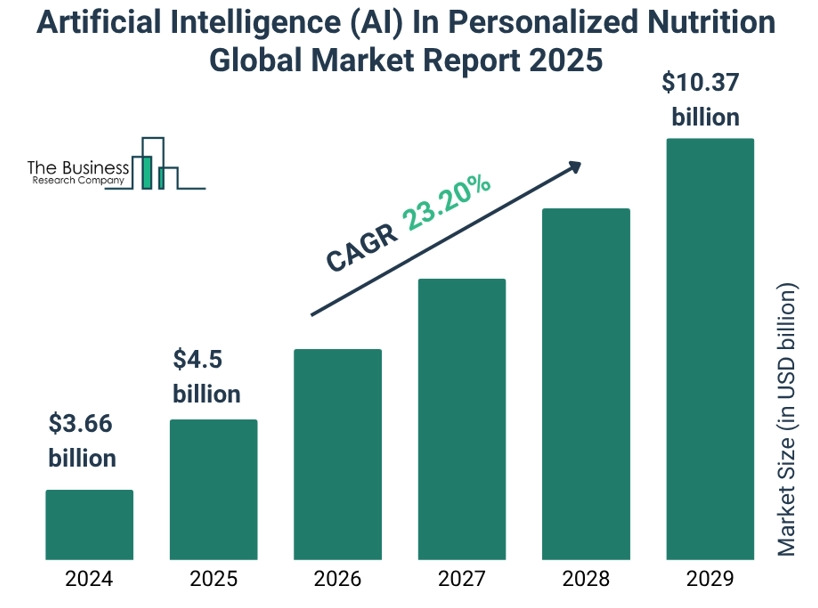
And the variety, functionality, and accuracy of today’s applications are poised to vastly improve. The AI-nutrition-app market is set to surge from around 4 billion dollars in 2024 to well over 10 billion dollars in the next five years, driven by improved image-recognition technologies, wider health-tech adoption, and a growing demand for personalized eating solutions.
When a Picture is Worth 1,000 Calories
Logging meals used to mean tedious typing, guesswork, and good intentions that fizzled out after a week. Enter AI-powered meal recognition apps: tools that analyze your food from a single photo.
Apps like CalorieMama, MyFitnessPal’s Meal Scan, Food AI – Plate Scan, and Cal AI use photos to identify foods, estimate portion sizes, and display calories, macronutrients, and even your progress toward recommended daily values in seconds.
Recent research published in Frontiers in Nutrition (2025) demonstrates that AI models can accurately identify foods with up to 90 per cent accuracy and estimate nutrients within a few percentage points of laboratory-measured values. That means your phone can now serve as a mini nutritionist—tracking trends, flagging nutrient gaps, and helping users understand how their daily choices stack up. A word of caution, though, it does not capture hidden ingredients like spices, sodium, and sugars.
“These image-based apps are helping people connect what’s on their plate to what’s happening in their body,” says Dr. Dana Small, a Yale neuroscientist who studies food perception and decision-making.
Beyond Counting Calories: Tracking Nutrition
If wearables like the Oura ring can track your sleep and recovery, why can’t they do the same for tracking your nutrition? That’s the next wave of AI-driven metabolic tracking.
Emerging platforms like ZOE, Portion Master, Lumen, and January AI are connecting dietary input with biometric feedback, utilizing glucose monitors, gut microbiome analysis, and AI modeling to demonstrate how your body responds to specific foods.
Think of it as a nutrition version of precision medicine: your diet is fine-tuned based on your own biology, not broad averages.
- ZOE pairs microbiome testing with an app that ranks foods by how they impact your blood sugar and fat metabolism.
- Lumen uses a handheld device to analyze your breath and determine whether your body is burning carbs or fat.
- January AI predicts how your glucose levels will react to different foods—before you eat them—using data from a continuous glucose monitor (CGM).
- Portion Master allows consumers to analyze their plates for precise calorie and macronutrient information.
Clinical studies published in Nature Medicine and Cell Metabolism have demonstrated that personalized nutrition can significantly enhance blood sugar control, lipid levels, and satiety—key markers of cardiovascular and metabolic health.
“We’re moving from one-size-fits-all nutrition to a world where your body’s data writes its own menu,” says Dr. Tim Spector, co-founder of ZOE.
The Smart Fridge Revolution: From Waste to Wellness
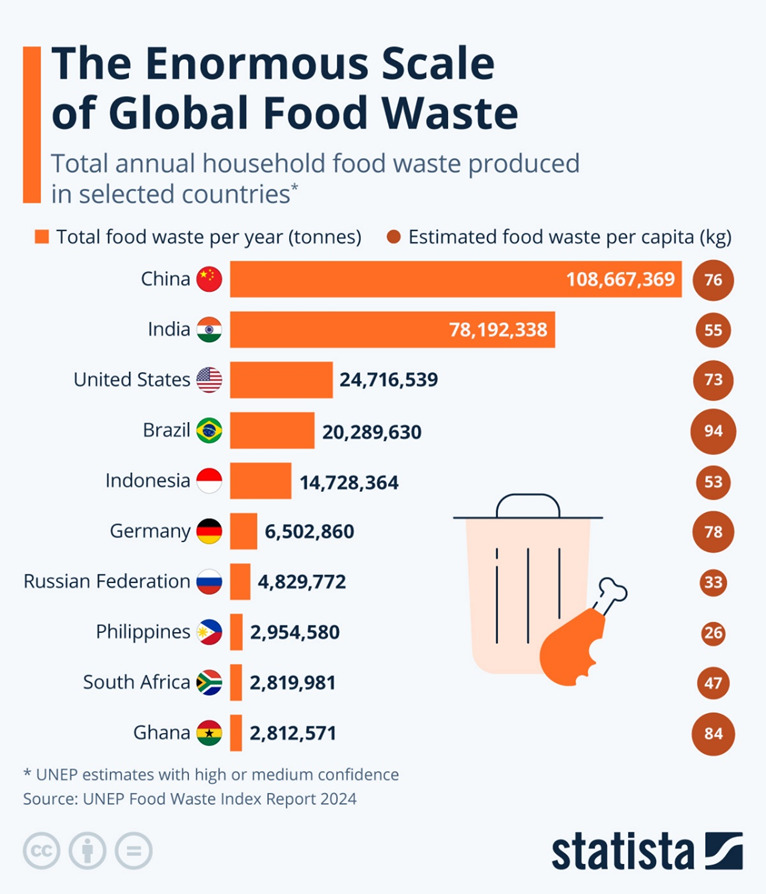
Nearly 40 per cent of all food produced in the U.S. is thrown away, costing the average family over 1,800 dollars a year and contributing to 8 to 10 per cent of global greenhouse gas emissions. AI is stepping in to change that as well.
Apps like Samsung Food now utilize Vision AI to identify ingredients from photos of your pantry or fridge, suggest recipes, and prioritize items that are close to expiring. Plant Jammer and Nosh also take a similar approach: inventory your fridge/pantry and suggest creative recipes from what you already have.
In hospitality and institutional settings, AI waste-tracking systems have already shown dramatic results. One pilot in hotels saw a 76 per cent reduction in kitchen waste and a 55 per cent reduction in post-consumer waste. Another retailer pilot using AI restocking/ordering systems (Shelf Engine / Afresh) reduced waste by 14.8 per cent on average.
In homes, the research is still emerging, but the promise is real: more home-cooked meals, less impulse takeout, and more innovative use of what you already bought.
My Experience: Putting AI to Work In My Own Kitchen
Curious to see how these tools function in daily life, I tested both Samsung Food and Nosh over several weeks.
Samsung Food’s Vision AI easily scanned items in my fridge, sometimes correctly identifying even partially used produce, and generated recipes that incorporated what I already had on hand. It wasn’t perfect (a few mystery leftovers stumped it), but the suggestions often saved me from another night of takeout.
Nosh impressed me with its practical focus on expiration tracking. After logging items, it reminded me when foods were nearing their “use by” date, prompting me to use or freeze them. I noticed I was throwing out less, planning meals more efficiently, and even getting a clearer sense of what I actually eat week to week.
One of my colleagues found the MyFitnessPal app easiest to use for daily macronutrient analysis. Because the platform has been around for years, it’s got the biggest knowledge base, but she could still use manual entry to make the inevitable adjustments. She also tried Calorie Mama for its “point and shoot” ease of photo analysis, but had to spend considerable time correcting multiple entries.
Another colleague had a different but equally fascinating experience with AI, one centered on nutrition and medication management. He found that AI tools can help identify the best ways to balance dietary needs with prescribed medications. By analyzing data from his personal medication regimen, the system flagged potential adverse food interactions and suggested compatible dietary options. The result was a more comprehensive understanding of how food and medicine interact, which he could then discuss with his doctor — empowering faster, more informed decisions about his health.
These experiences underscore what the data already shows: when technology makes healthy, low-waste choices easier and visible, we’re far more likely to follow through.
The Bigger Picture: AI and the Future of American Health
The conversation sparked by Robert F Kennedy, Jr.’s Make America Healthy Again movement has reminded America that nutrition isn’t just personal—it’s national. How we eat affects our health, our economy, and the planet. The truth is, we can’t policy our way into better nutrition alone. We need tools that make healthy eating easier, more intuitive, and more sustainable in real time.
That’s where AI has the power to deliver. Whether it’s guiding better food choices, tailoring diets to our individual biology, or reducing waste in our kitchens, technology can help bridge the gap between what we know and how we live.
If the headlines paint a sobering picture of our current food system, these innovations hint at a hopeful future—one where science, data, and human habits finally align. A future where healthy eating isn’t just a guideline from Washington, but a personalized, everyday experience powered by intelligence—artificial and otherwise.
The Bottom Line
Artificial intelligence isn’t replacing your dietitian or doctor—it’s putting the tools to follow their guidance in your pocket. Snap a picture of your meal to see how you’re fueling your day, scan your fridge to find new uses for last night’s leftovers, pair your meals with biometric feedback for precision-level insight into your health. The result? Less waste, better nutrition, and smarter choices—powered by data, guided by science, and ultimately, driven by you. _____________________________________________________________________________________________
Hayley Philip is a graduate of the University of California Santa Barbara with degrees in Sociology and Marketing. Hayley researches and writes about the intersectionality of regeneration and sustainable growing methods that will safely produce enough food for future generations. ___________________________________________________________________________________________________________
A version of this article was originally published at Dirt to Dinner and is reposted here courtesy of the Genetic Literacy Project.